The Power of Business Technology and Communication Icons in Modern Design
Understanding the Role of Business and Technology Icons
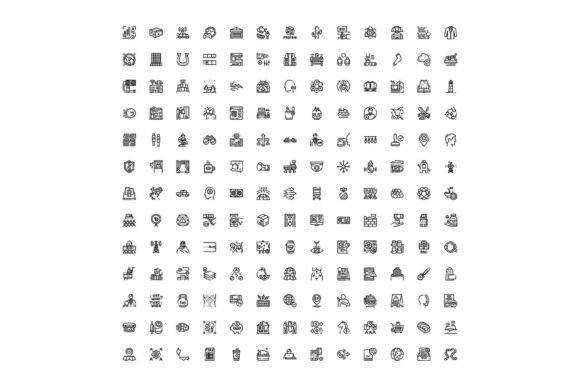
Icons are more than just visual embellishments—they are essential tools that enhance communication, navigation, and user experience across digital platforms. The Collection of Business Technology and Co offers a comprehensive set of line icons representing various aspects of modern life, including business operations, technological advancements, communication methods, and human interaction.
These icons serve as universal visual language elements, helping users quickly understand complex ideas without the need for lengthy explanations. Whether you're designing a website, creating a mobile app, or developing marketing materials, incorporating the right icons can make a significant difference in how your audience interacts with your content.
Why Business and Technology Icons Matter
In today’s fast-paced digital environment, clarity and efficiency are key. Icons provide a quick and intuitive way to convey information. For instance, a magnifying glass icon is universally recognized as a search tool, while a house icon typically represents a homepage. These visual cues reduce cognitive load and improve usability.
When it comes to business and technology, icons help simplify abstract or technical concepts. A cloud icon might represent cloud computing, while a gear symbol could indicate settings or system configurations. By using these recognizable symbols, designers can make interfaces more user-friendly and accessible to a broader audience.
Applications Across Industries
- E-commerce: Icons help users navigate product categories, shopping carts, and payment options.
- Education: Icons can represent courses, certifications, or learning tools in online learning platforms.
- Healthcare: Medical icons assist in clearly communicating health services, appointments, and patient information.
- Finance: Banking apps use icons for transactions, budgets, and account management.
The Significance of Diverse Icon Sets
A large collection of diverse line icons allows designers to accurately represent a wide range of topics and scenarios. This diversity is crucial because it ensures inclusivity and relevance across different cultures, industries, and user groups. Whether you need an icon for remote work, digital marketing, cybersecurity, or team collaboration, having a broad selection makes it easier to find the perfect visual match.
Moreover, diverse icon sets support responsive design. With scalable line icons, designers can ensure that visuals remain crisp and clear across various screen sizes and resolutions. This adaptability is essential in a world where users access content on smartphones, tablets, and desktops alike.
How to Choose the Right Icons for Your Project
- Identify the Purpose: Determine what each icon needs to represent and how it fits into the overall design.
- Consider Consistency: Use icons that share a similar style, stroke width, and color palette to maintain visual harmony.
- Test for Clarity: Ensure icons are easily recognizable and not open to misinterpretation.
- Optimize for Accessibility: Choose icons that are distinguishable for users with visual impairments, possibly adding text labels for clarity.
Practical Uses in Web and Graphic Design
Icons play a crucial role in both web and graphic design. In web design, they are often used to enhance navigation menus, call-to-action buttons, and informational sections. For example, a contact page might feature icons for email, phone, and location to guide users quickly to the information they need.
In graphic design, icons can be used to create infographics, presentations, and print materials that are visually engaging and easy to digest. They help break down complex data into digestible visuals, making them ideal for reports, educational materials, and marketing collateral.
Real-World Examples of Icon Integration
- Dashboard Interfaces: Dashboards often use icons to represent different data categories, such as sales, user activity, and system health.
- Mobile Apps: App developers use icons to label features and actions, such as sharing, saving, or editing content.
- Website Menus: Navigation menus frequently incorporate icons to guide users to important sections like home, blog, or support.
Common Misconceptions About Icon Usage
While icons are powerful tools, there are some common misconceptions that can lead to ineffective design choices. One of the most prevalent misunderstandings is that icons can stand alone without any accompanying text. While some icons are universally understood, many require context to be fully effective.
Another misconception is that more icons always mean better design. In reality, overusing icons can lead to visual clutter and confusion. It's important to strike a balance between visual appeal and usability.
Best Practices for Icon Implementation
- Use Familiar Symbols: Stick to commonly recognized icons to avoid confusion.
- Group Related Icons: Organize icons by category to improve user comprehension.
- Ensure Scalability: Choose vector-based icons (like SVGs) that maintain quality at any size.
- Align with Brand Identity: Select icons that reflect your brand’s tone and aesthetic.
How Business Technology Icons Reflect Modern Trends
The Collection of Business Technology and Co icons reflects the evolving nature of the digital world. As new technologies emerge and business models shift, iconography must adapt to remain relevant. For example, the rise of remote work has increased the demand for icons related to video conferencing, home offices, and virtual collaboration.
Similarly, as sustainability becomes a growing concern, icons representing green energy, recycling, and eco-friendly practices are becoming more common. These visual elements not only communicate ideas but also reflect broader societal trends and values.
The Future of Icon Design
As technology continues to advance, so too will the design and functionality of icons. We can expect to see more animated and interactive icons, especially in mobile and web applications. Additionally, the use of AI in design tools may lead to more personalized and adaptive icon systems that respond to user behavior in real-time.
Conclusion: Leveraging Icons for Better Communication
In conclusion, the Collection of Business Technology and Co icons offers a valuable resource for designers, developers, and communicators. These icons help bridge the gap between complex ideas and user understanding, making digital experiences more intuitive and engaging.
Whether you're building a website, designing an app, or creating marketing materials, integrating a large collection of diverse line icons can enhance your work and improve user interaction. By choosing the right icons and using them effectively, you can communicate more clearly, guide your audience more efficiently, and create a more polished and professional design.
As the digital landscape continues to evolve, the importance of well-designed, meaningful icons will only grow. Embracing this visual language is not just a design choice—it's a strategic advantage in today’s visually driven world.